

Table of Contents
- Identify Your Driveway Stain Type
- Gather Your Cleaning Equipment and Materials
- Best Driveway Cleaning Products UK
- How to Remove Oil Stains from Block Paving
- Cleaning Black Spots from Patio Slabs
- Pressure Washing Your Driveway Safely
- When to Call a Professional Cleaner
- Frequently Asked Questions
Last Updated: September 22, 2026
Identify Your Driveway Stain Type
The first step to cleaning driveway stains effectively is knowing what you’re dealing with. Different stains require different approaches, and using the wrong method can make things worse. Oil stains, moss, algae, rust, and tyre marks all need specific treatment.
Oil stains appear as dark patches that don’t wash away with water alone. They’re common on driveways where vehicles park regularly. Moss and algae create black or green spots, particularly in shaded areas or where moisture collects. Rust stains show as orange or brown discolouration, often from metal objects or guttering. Tyre marks are usually surface-level dark streaks.
Look closely at your stain before you start. Press a cloth against it. If it’s greasy, you’ve got oil. If it brushes off easily, it’s likely moss or algae. This simple check saves you time and prevents damage from using pressure washing on delicate growths.
Gather Your Cleaning Equipment and Materials
You’ll need the right tools to clean driveway stains safely and effectively. Start with basic protective gear: rubber gloves, safety glasses, and sturdy footwear with grip. Wet surfaces are slippery, so proper footing matters.
For equipment, gather:
- A stiff-bristled brush or broom
- A bucket for mixing solutions
- A garden hose with spray nozzle
- Old cloths or rags for testing and drying
- A pressure washer (optional, but useful for larger areas)
If you’re hiring professional help, companies like Aquaclean Solutions use surface-appropriate methods that avoid damage. Many homeowners attempt this themselves first, then call professionals when DIY attempts leave patchy or uneven results.
Start with what you have at home. Most household items work for initial cleaning. You can upgrade to specialist equipment if needed, but don’t invest heavily until you’ve assessed the stain type and severity.
Before you use any cleaning product on your driveway, test it on a small, hidden area first. This prevents surprises on visible surfaces and lets you see how your particular stain responds.
Best Driveway Cleaning Products UK
When selecting products to clean driveway stains, match the cleaner to the stain type. The wrong product wastes money and can damage your surface.
For oil stains, degreasing products work best. These break down the oily residue so water can rinse it away. Look for biodegradable options that won’t harm plants or contaminate drainage systems.
For moss and algae, use a moss killer or algaecide. These products kill the growth at its root, preventing quick regrowth. Apply them and let them work for the time stated on the label before rinsing.
For general dirt and light stains, a pressure washer with detergent attachment often suffices. Many people start here before moving to specialist products.
Common products available across the UK include:
- Proprietary driveway cleaners from garden centres
- Biodegradable degreasing solutions
- Moss and algae killers
- Bleach-based cleaners (use with caution on coloured surfaces)
- Specialist block paving cleaners
Read labels carefully. Some products require dilution. Others need to sit for hours before rinsing. Follow instructions exactly to avoid damaging your driveway or creating slip hazards.
Aquaclean Solutions uses surface-appropriate cleaning methods selected for your specific driveway type and stain. This targeted approach delivers a noticeably cleaner finish without unnecessary risk to your property.
Bleach can discolour some driveway materials and damage plants nearby. Test any bleach-based product on a hidden corner first, and rinse thoroughly afterwards.
How to Remove Oil Stains from Block Paving
Oil stains on block paving need prompt attention because they set over time. Fresh spills are easier to remove than stains that have sat for months.
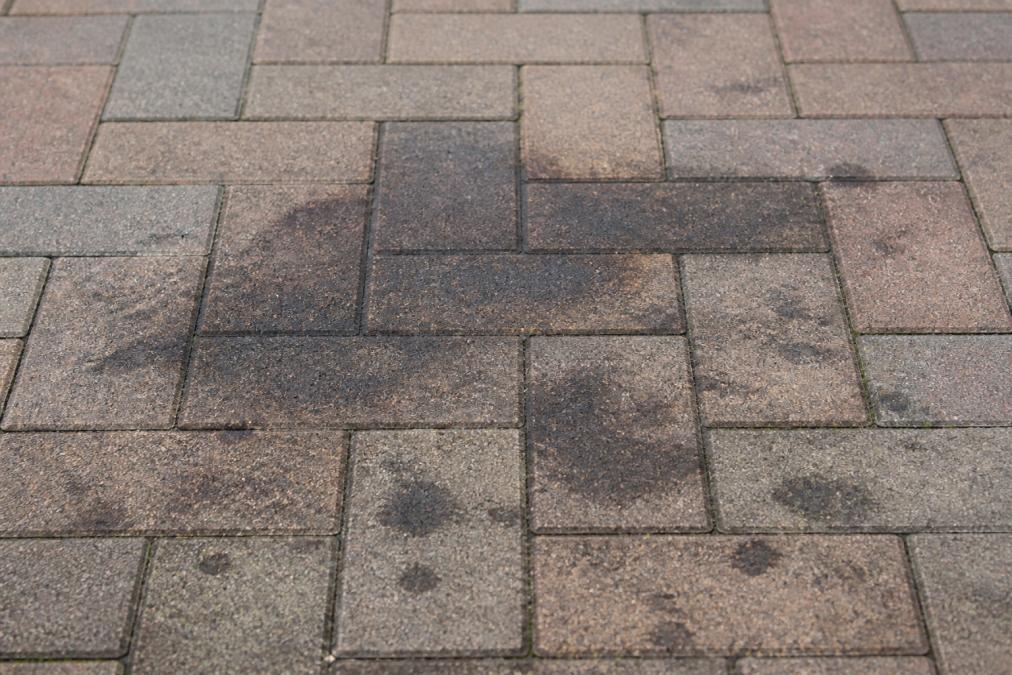
Start by blotting fresh oil with absorbent material like cat litter or sand. Let it sit for 24 hours to absorb as much as possible, then sweep it away. This removes the surface layer before you apply any cleaner.
Next, apply a degreaser directly to the stain. Let it soak for the time recommended on the product label, usually 15 minutes to several hours. The longer it sits, the more it breaks down the oil.
Scrub the stain with a stiff brush using firm, circular motions. Work from the edges toward the centre to avoid spreading the stain. Rinse thoroughly with clean water. For stubborn stains, repeat the process.
If the stain persists after two applications, pressure washing can help. Use low pressure (under 100 bar) to avoid damaging the block paving surface. High pressure can force water between blocks and cause lifting or cracking.
Many people find that DIY attempts leave patchy results. Block paving is porous, and oil soaks deep. Professional cleaners have access to stronger degreasers and equipment designed specifically for this surface type. Aquaclean Solutions knows exactly how much pressure each surface can handle without damage.
Oil stains are easier to remove when fresh. The longer they sit, the deeper they penetrate and the harder they become to shift completely.
Cleaning Black Spots from Patio Slabs
Black spots on patio slabs are usually moss, algae, or mould. These thrive in damp, shaded areas and spread quickly if left untreated. Cleaning them promptly prevents slippery surfaces and stops growth spreading to neighbouring areas.
Start by sweeping loose debris from the slabs. Brush away any fallen leaves or dirt that traps moisture. This simple step removes the environment where these growths prefer to live.
Apply a moss or algae killer to the affected slabs. Follow the product instructions for dilution and application. Most products need 24 to 48 hours to work before you rinse them away. During this time, keep the area dry if possible.
After the treatment period, rinse thoroughly with clean water. A garden hose works fine for this. Brush the slabs gently with a soft brush to remove loosened growth. Avoid wire brushes, which can scratch the surface.
For stubborn black spots that won’t shift, use a pressure washer on low setting. Start at low pressure and increase gradually. Watch the surface carefully, too much pressure can damage patio slabs, particularly older ones.
Prevention matters as much as cleaning. Keep gutters clear so water doesn’t pool on slabs. Trim overhanging branches to increase sunlight and air circulation. These simple steps reduce regrowth significantly.
Professional cleaning of patio slabs ensures even coverage and proper pressure settings. Aquaclean Solutions’ approach to cleaning black spots from patio slabs uses surface-appropriate methods that remove the growth.
Pressure Washing Your Driveway Safely
Pressure washing is powerful and effective, but misuse causes damage. Understanding safe pressure washing prevents costly repairs and achieves the finish you want.
Different surfaces require different pressure settings:
- Block paving: 80-100 bar maximum
- Concrete: 100-150 bar
- Tarmac: 50-80 bar (low pressure only)
- Sealed surfaces: check manufacturer guidance first
Start at low pressure and increase gradually. Watch the surface as you work. If you see damage beginning, stop immediately and reduce pressure further.
Keep the nozzle moving constantly. Holding it in one spot concentrates pressure and can cause pitting or gouging. Maintain a distance of at least 30 centimetres from the surface.
Wear protective equipment: safety glasses and gloves. Pressure washers can throw debris at high speed. Never direct the jet at people, animals, or windows.
Before pressure washing, test the method on a hidden area. This shows you how your driveway responds and prevents surprises on visible surfaces. Check that water won’t pool in gutters or damage render on walls.
Many homeowners rent pressure washers and attempt this themselves. Common mistakes include using excessive pressure, holding the nozzle too close, or pointing the jet upward and forcing water into gutters or under render. These mistakes cause expensive damage.
Water forced under render or into gutters can cause damp inside your property. Always direct the jet downward and away from building materials.
When to Call a Professional Cleaner
Sometimes DIY cleaning doesn’t deliver the results you need. Knowing when to call a professional saves time, money, and frustration.
Call a professional if:
- You’ve tried cleaning and results are patchy or uneven
- The stain is old and deeply set
- You’re selling your property and need perfect results quickly
- Your driveway has specialist surfaces like decorative paving or sealed finishes
- You’re nervous about using pressure washers
- You have limited mobility or health concerns
Professional cleaners understand how different surfaces respond to different methods. They know the safe pressure for each material and have access to specialist products and equipment. They also carry full insurance, protecting you if something goes wrong during the clean.
Aquaclean Solutions brings fully insured service, surface-appropriate cleaning methods, and reliable booking to your driveway cleaning. Our team knows exactly how to restore your surfaces without risk.
Frequently Asked Questions
What is the best way to remove oil stains from a driveway?
Oil stains on driveways respond best to specialist degreasers applied to the affected area and left to soak for 15-30 minutes before scrubbing with a stiff brush. For fresh spills, absorbent materials like cat litter or sand can prevent the oil from setting deeper into the surface. Older, stubborn stains may require professional treatment, particularly on porous surfaces like block paving where oil penetrates deeper.
How do I remove black spots from patio slabs?
Black spots on patio slabs are usually moss, algae, or mould growth. A moss-killing treatment can address the growth. Scrub gently with a soft-bristled brush to avoid surface damage, then rinse thoroughly. For persistent growth in shaded areas, a moss-killing treatment can reduce regrowth.
Is it safe to use a pressure washer on all driveway surfaces?
Pressure washers can damage certain surfaces if used incorrectly. Block paving, natural stone, and older concrete are vulnerable to erosion and joint damage at high pressure. Tarmac driveways are particularly at risk. Always use low pressure (below 100 bar) on delicate surfaces, test on an inconspicuous area first, and maintain distance from the surface. When in doubt, hand-scrubbing or professional cleaning is safer.
Can I use washing-up liquid to clean driveway stains?
Washing-up liquid is mild and safe for general dirt removal on driveways. Mix with water to create a cleaning solution suitable for light soiling and algae prevention. However, it lacks the strength needed for stubborn oil stains, tyre marks, or heavy moss growth. Specialist driveway cleaners or degreasers are more effective for these tougher stains and work more efficiently on porous surfaces.
Maintaining a clean driveway protects your property investment and enhances curb appeal. Whether you tackle stains yourself or call a professional, starting with the right approach saves time and prevents damage. For homeowners in Wokingham and Berkshire who want reliable, fully insured cleaning without the risk, Aquaclean Solutions delivers restored surfaces and peace of mind. Get a Free Quote today and see how we can transform your driveway’s appearance.