


Table of Contents
- Why Pressure Washer Streaks Appear on Concrete
- What You’ll Need Before Starting
- How to Fix Pressure Washing Stripes on Concrete
- Using a Surface Cleaner for Concrete Pressure Washing
- Choosing the Best Pressure Washer Nozzle for Concrete
- Pressure Washing Concrete Without Streaks: Prevention Techniques
- Common Mistakes to Avoid
- When to Call a Professional
- Frequently Asked Questions
Last Updated: 12 October 2026
Why Pressure Washer Streaks Appear on Concrete
Pressure washer streaks on concrete happen for specific reasons. Understanding the cause helps you fix the problem and prevent it next time.
The most common culprit is uneven pressure. When you hold the nozzle at different angles or distances, some areas get blasted harder than others. Lighter areas dry faster and show dirt more clearly. Darker streaks appear where water pooled or pressure was too strong.
Another cause is poor technique. Moving the wand too quickly across the surface leaves missed patches. Moving too slowly can strip away the top layer of concrete, creating visible lines. The pressure washer nozzle pattern also matters; a narrow jet creates obvious stripes compared to a wider spray.
Water pooling is a third reason. Concrete slopes toward drains or low spots. Water collects there and leaves mineral deposits as it evaporates. These deposits show up as dark or light streaks depending on your local water hardness.
Finally, existing concrete damage plays a role. Cracks, pits, and uneven surfaces trap water differently. Pressure washing highlights these imperfections rather than creating them.
The key insight: streaks aren’t always caused by the pressure washer itself. Sometimes they reveal what was already there: uneven concrete, mineral deposits, or algae growth in low spots.
What You’ll Need Before Starting
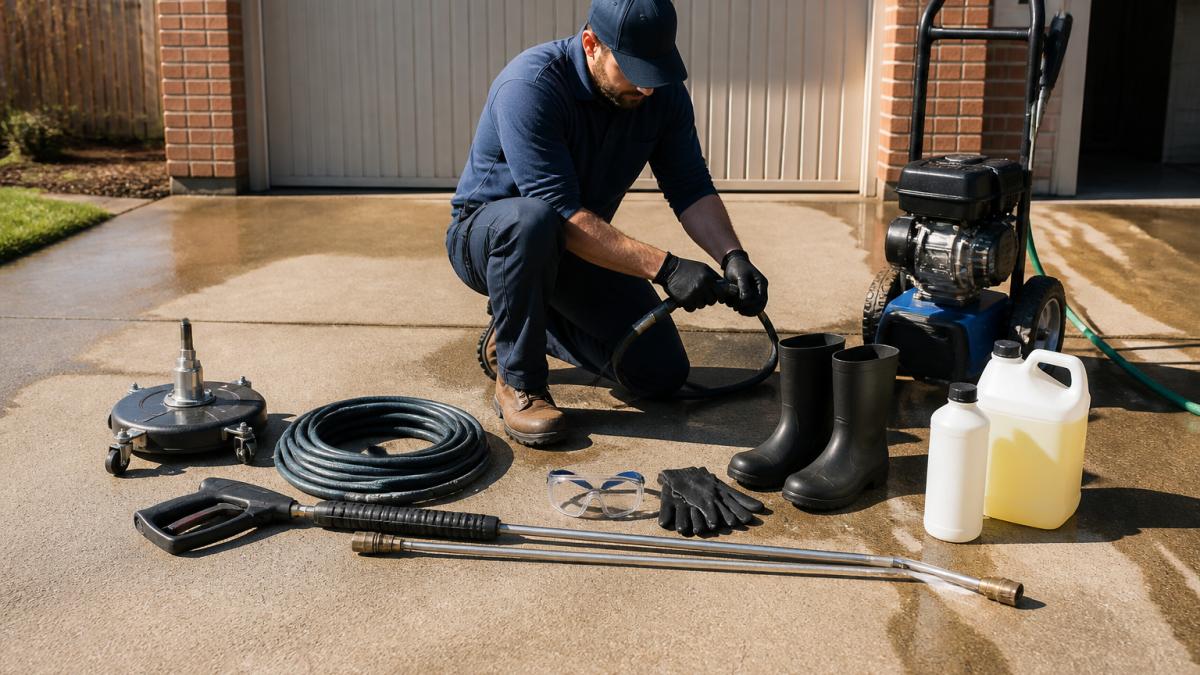
Gather the right equipment before you begin. Having everything ready means better results and faster work.
Essential items:
- Pressure washer (3000-4000 PSI for concrete)
- Garden hose and water source
- Bucket for cleaning solution
- Stiff-bristled brush
- Safety glasses and gloves
- Work boots with good grip
Optional but helpful:
- Surface cleaner attachment (reduces streaking significantly)
- Extension wand for reaching high spots
- Detergent designed for pressure washers
- Squeegee for directing water flow
Check your pressure washer’s manual for the correct PSI setting for concrete. Too low and you won’t clean effectively. Too high and you risk gouging the surface or creating worse streaks.
Test your water supply. You need steady, consistent water flow. Low pressure from your hose means the pressure washer works harder and less effectively.
Inspect the concrete first. Look for cracks, loose areas, or spots that might need extra attention. This helps you plan your approach and avoid problem areas.
How to Fix Pressure Washing Stripes on Concrete
Learning how to remove pressure washer streaks from concrete requires patience and the right method. Start by identifying what type of streak you have.
Light streaks (areas that look bleached or pale) usually mean the concrete was over-cleaned or stripped. These are harder to fix because they represent actual damage to the surface. You can darken them slightly by applying a concrete sealer or stain, but the underlying damage remains.
Dark streaks (dirty lines or mineral deposits) respond better to cleaning. Use a stiff brush and mild detergent solution first. Scrub the streaked areas by hand. Let the solution sit for 10-15 minutes.
For stubborn dark streaks, make a paste from bicarbonate of soda and water. Apply it to the streaks and let it dry slightly. Scrub with a stiff brush, then rinse. This method avoids aggressive pressure that might worsen the problem.
If the streaks are from mineral deposits or algae, a mild acid cleaner helps. Mix one part white vinegar to three parts water. Apply to the streaks, wait 15 minutes, then scrub and rinse.
Avoid re-pressure washing the same area repeatedly. Each pass risks creating new streaks or deepening existing ones. One careful pass at moderate pressure beats three aggressive passes.
Using a Surface Cleaner for Concrete Pressure Washing
A surface cleaner attachment dramatically reduces the risk of streaks. This tool is worth considering if you have a large area to clean.
Surface cleaners work by spinning two jets in opposite directions. This balanced approach prevents the uneven pressure that causes streaks. The result is consistent, even cleaning across the entire surface.
How surface cleaners work:
- Two rotating nozzles spray water at equal angles
- The spinning motion moves the cleaner forward smoothly
- Water pressure stays uniform across the cleaning path
- No stopping or starting means no pressure spikes
Most surface cleaners attach to your pressure washer wand. They’re available in widths from 15 to 30 inches. Wider models cover more ground but are heavier to control.
The downside is cost. Quality surface cleaners range from moderate to expensive, depending on the brand and size. For a one-time job, hiring might make more sense than buying.
Surface cleaners work best on flat, open areas. Patios and driveways are ideal. They struggle around obstacles, tight corners, and steps. You’ll still need a regular wand for those spots.
When using a surface cleaner, maintain consistent forward speed. Move too fast and you miss dirt. Move too slow and you risk over-cleaning that section. A steady walking pace usually works well.
Surface cleaners are the professional standard for avoiding streaks on large concrete areas. They cost more upfront but deliver noticeably better results with less skill required.
Choosing the Best Pressure Washer Nozzle for Concrete
The nozzle you choose determines how the pressure washer behaves. Wrong nozzle choice is a common reason for streaks.
Nozzle angles explained:
- 0° (red): Concentrated jet, highest pressure. Use only for removing stubborn stains on small spots. Creates streaks easily.
- 15° (yellow): Narrow spray, high pressure. Suitable for driveways but requires careful technique.
- 25° (green): Medium spray, moderate pressure. Best choice for most concrete cleaning tasks.
- 40° (white): Wide spray, lower pressure. Good for gentle cleaning and rinsing.
- 65° (black): Widest spray, lowest pressure. Mainly for rinsing or delicate surfaces.
For concrete driveways and patios, the 25° nozzle (green) is the best starting point. It provides enough pressure to clean effectively without being so concentrated that it creates streaks.
The 15° nozzle (yellow) works if you maintain consistent distance and angle. This requires more skill and attention. Most people find it too easy to create streaks with this nozzle.
Never use the 0° nozzle on large areas. It’s designed for spot treatment only. The concentrated jet will absolutely create visible stripes across your concrete.
Distance matters as much as nozzle choice. Keep the nozzle 30-45 cm from the concrete surface. Closer than 30 cm increases pressure and risk of streaks. Further than 45 cm reduces cleaning power.
Test your nozzle and distance on a hidden area first. This lets you see how your pressure washer behaves before tackling the main area.
Pressure Washing Concrete Without Streaks: Prevention Techniques
Preventing streaks is easier than fixing them. Use these techniques from the start and you’ll avoid most problems.
Maintain consistent distance. Hold the wand at the same distance from the concrete throughout. Use your arm length or a measuring guide if needed. Consistency prevents pressure variations that cause streaks.
Use smooth, overlapping strokes. Move the wand in straight lines. Overlap each pass by about 50%. This ensures complete coverage without missed patches or dark lines from uneven pressure.
Work from top to bottom. Gravity helps dirty water flow downward. Starting at the top means water carries debris away naturally. Working upward forces water against the flow, leaving streaks.
Keep the wand moving. Never stop or pause on one spot. Stationary pressure creates dark marks. Smooth, continuous motion prevents pooling and uneven pressure.
Avoid crossing your body. Work from left to right or right to left. Crossing motions change your arm angle and distance. This inconsistency creates visible lines.
Rinse thoroughly. After washing, do a final rinse pass. Use a lower pressure setting (around 2000 PSI) and wider nozzle. This removes soap residue and mineral deposits that might show as streaks.
Let concrete dry completely. Wet concrete looks darker and uneven. Wait 24-48 hours before assessing your work. What looks like a streak when wet often disappears as the concrete dries.
The most common mistake is stopping the wand mid-stroke to check your work. This creates dark pressure marks. Keep moving smoothly and check results only after the concrete dries completely.
Common Mistakes to Avoid
Learning from others’ mistakes saves time and frustration. These errors cause most pressure washing streaks.
Mistake 1: Using too much pressure. High PSI seems like it cleans better. It actually damages concrete and creates obvious streaks. Stick with 3000-4000 PSI for most residential concrete.
Mistake 2: Holding the nozzle at an angle. Angled sprays create uneven pressure. Keep the nozzle perpendicular to the concrete surface. This maintains consistent pressure across the entire spray pattern.
Mistake 3: Working too quickly. Speed doesn’t improve results. Fast passes miss dirt and create streaks. Move at a steady pace that allows proper cleaning.
Mistake 4: Cleaning in direct sunlight. Hot concrete dries too quickly. Water evaporates before you finish, leaving mineral deposits and streaks. Clean in shade or on cooler days when possible.
Mistake 5: Using the wrong detergent. Standard household cleaners don’t work well with pressure washers. They either don’t clean effectively or leave residue. Use detergent specifically designed for pressure washers.
Mistake 6: Ignoring water quality. Hard water leaves mineral deposits that show as streaks. If your area has hard water, rinse with distilled water as a final step.
Mistake 7: Pressure washing the same spot repeatedly. Each pass risks creating new problems. One or two careful passes work better than multiple aggressive attempts.
Mistake 8: Not checking the pressure washer nozzle. Worn or damaged nozzles spray unevenly. Inspect your nozzle regularly and replace it if it looks cracked or clogged.
When to Call a Professional
Sometimes pressure washing is better left to professionals. Knowing when to call saves money and prevents damage.
Call a professional if your concrete has significant cracks or damage. Pressure washing can worsen these issues. Professionals know how to work around damaged areas safely.
If you’ve already created streaks and home remedies haven’t worked, professional cleaning is worth considering. Professionals have equipment and techniques that homeowners typically don’t have access to.
For large commercial areas, professional service makes sense. The time investment alone justifies the cost. Commercial spaces also need consistent, professional-looking results.
If you’re uncertain about your pressure washer’s settings or technique, ask a professional first. A quick consultation prevents costly mistakes.
At Aquaclean Solutions, we help homeowners and businesses with pressure washing challenges. Our team understands how to remove pressure washer streaks from concrete without causing additional damage. We use surface-appropriate methods and equipment designed to deliver a noticeably cleaner finish. Our fully insured service means you’re protected if anything goes wrong.
For persistent streaks, mineral deposits, or if you’re concerned about damaging your concrete further, professional cleaning is the safest choice. We can assess your specific situation and recommend the best approach.
Pressure washer streaks on concrete don’t have to be permanent. Whether you tackle the problem yourself or call a professional, the key is understanding what causes streaks and how to prevent them. At Aquaclean Solutions, we help homeowners restore their driveways and patios to pristine condition.
Frequently Asked Questions
Will pressure washer streaks fade as the concrete dries?
Streaks may appear slightly less noticeable once concrete fully dries, but they typically won’t disappear completely on their own. The underlying issue, uneven pressure application or overlapping passes, remains. Proper remediation using even-pressure techniques or a surface cleaner will permanently address the problem rather than waiting for natural drying.
Can you use a surface cleaner to remove lines from concrete?
Yes. A surface cleaner is one of the most effective tools for preventing and fixing streaks because it applies pressure evenly across the entire width. If you already have streaks, using a surface cleaner in a single pass at the correct pressure setting can blend them out and restore uniform appearance to your driveway or patio.
What pressure should you use to clean a concrete driveway without leaving streaks?
Most concrete driveways require 1500-2500 PSI for safe, streak-free cleaning. Higher pressures (above 3000 PSI) risk damage and streaking. Always test on a small, inconspicuous area first. Pressure alone doesn’t guarantee success; technique matters equally. Maintain consistent speed, use overlapping passes of 50%, and consider a surface cleaner to distribute pressure evenly across the surface.
How do you fix streaks on sealed or stained concrete?
Sealed or stained concrete requires extra caution. Pressure washing can damage sealers and stains if pressure is too high. Use lower PSI (under 1500) and wider nozzles. If streaks appear on sealed concrete, gentle re-washing with a surface cleaner at minimal pressure may help. For significant damage to sealant or stain, professional resealing or restaining may be necessary to restore appearance.